One in five rural bus routes have vanished despite pledges of a ‘bus revolution’
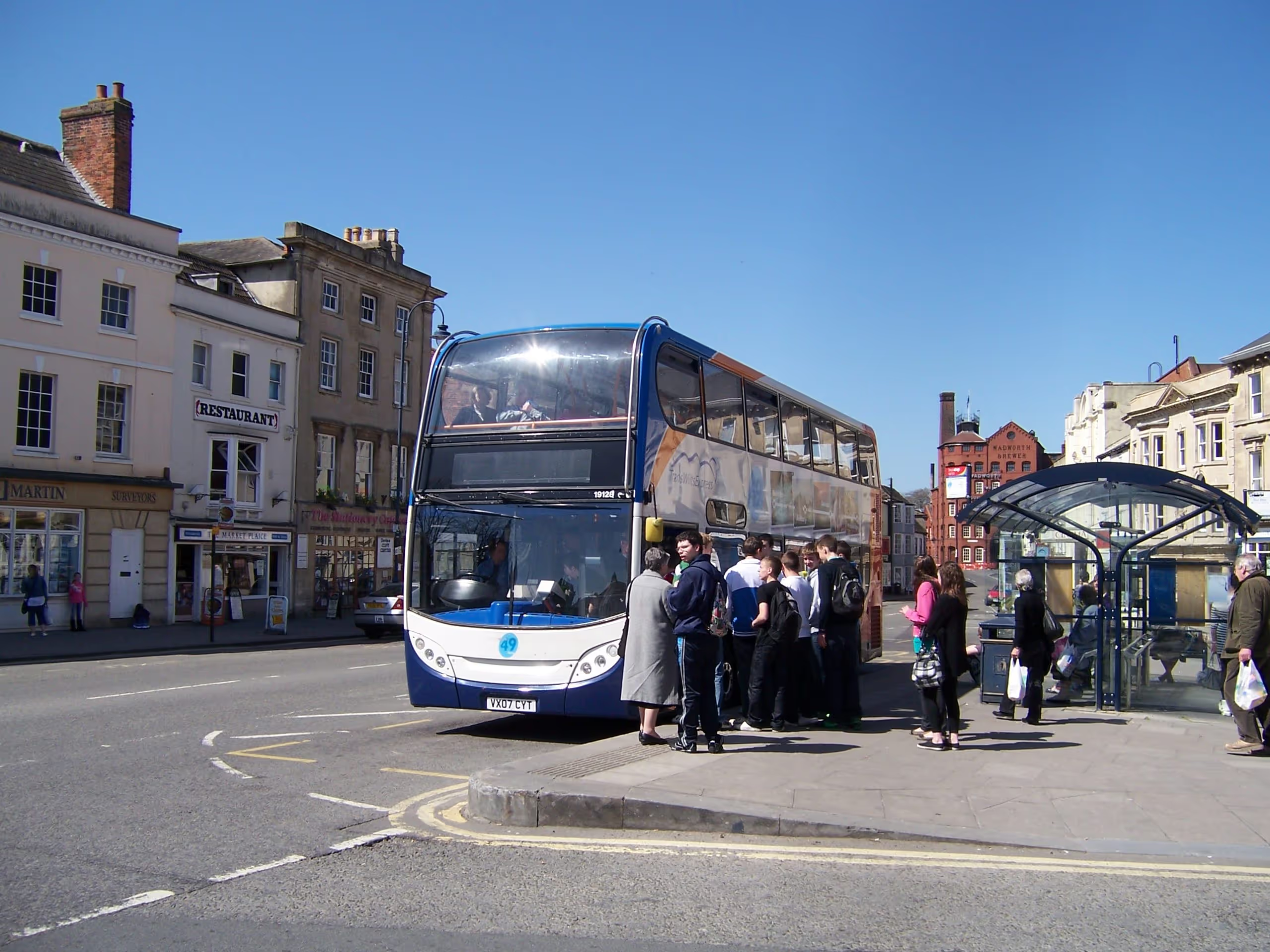

One fifth of ‘lifeline’ bus routes serving residents in county and rural areas have disappeared over the last five years despite pledges of a bus revolution, as analysis reveals the extent that these areas have lost out to cities and towns for much-needed funding.
New figures compiled by the County Councils Network (CCN) reveals that bus services have decreased by 18% in areas covered by county and unitary councils between 2019 and 2024, which is the biggest decline in England.
This is despite high-profile attempts over the last few years to address dwindling buses outside of London from successive governments, beginning with 2021’s National Bus Strategy. The network’s analysis county and unitary councils in the CCN membership have received just £31 per person on average to improve their buses since 2022, which is half the amount that went to large cities and towns, which have more comprehensive bus services.
County leaders warn that unless the government focuses more on their areas, rural residents will be ‘let down’, with services effectively in a state of managed decline. With county and unitary councils having significant shortfalls in their local transport budgets, and spending large proportions of their budgets on care services, they are increasingly reliant on central government funds to improve existing services or create new routes.
The analysis shows that:
- Almost a fifth – 18% - of bus routes in county areas have vanished between 2023/24 and the pre-pandemic year of 2018/19, as measured by vehicle miles. This is higher than anywhere else in England, with 70 fewer miles in county areas now being driven compared to 2019. The previous government’s National Bus Strategy has failed to arrest this decline, with services down 5% between the launch of funds from the strategy in 2022, and 2024.
- Those funds amount to £2.1bn in Bus Service Improvement Plan money from successive governments, but they have been unevenly spread across the country and have been focused mainly on urban areas. In five separate tranches of funding, county and rural councils have received £31 per person, compared to £58 per person for councils or combined authorities which cover England’s large cities and towns.
- There are clear winners and losers from the distributions of these funds. Portsmouth City Council has received £252 per person for bus improvements, but neighbouring Hampshire County Council received £14 per head. Stoke-on-Trent council received £157 per head, but its county neighbour, Staffordshire County Council, has been given £20 per person. Warrington received £100 per person, but neighbouring Cheshire East received £23 per person. Luton received £109 per person, more than treble its neighbour Hertfordshire County Council (£35 per person).
- Bus journeys are down for county and rural areas by 16% compared to the pre-pandemic year of 2019 – a fall of 100m journeys. However, there is demand for better buses in county areas. Bus journeys have increased by 32% - up 211m journeys - in county areas since funding started being distributed in 2022. This is the highest increase in England, showing that the investment county and unitary councils is working.
Over the last fifteen years, buses in rural areas have been in a steady decline, with a CCN report in 2023 finding that passenger numbers had dropped to a ‘historic low’ by 2022, with almost 350m fewer journeys taking place compared to 2010.
That decline was the steepest in England and those 37 county and unitary councils submitted bids totalling £3.6bn for the first round of Bus Service Improvement Grant, but only 10% of funds were distributed to those areas. This is despite those areas representing 54% of the county’s population outside of London.
County and unitary councils have put their funding to good use: reinstating services, funding new routes to hospitals, schools, and shops, and modernising bus stops and stations with live timetables and better infrastructure for unserved areas.
Ahead of the Spending Review this month, the CCN says that proposed government reforms in the Buses Bill such as franchising may be useful to some areas, but ‘tinker around the edges’ of what is really required. Further announcements such asking local authorities to identify ‘socially necessary’ local routes and asking them to protect those services shows that government understands the issues faced by local areas, but an increase in funding will be needed for councils to effectively protect routes.
Therefore, the government should prioritise the funding buses in county and rural areas in future rounds of funding for services, as this will not only bring up services levels to those enjoyed by those living in the major cities and towns, but help grow local county economies too.
Cllr Peter Thornton, Transport Spokesperson for the County Councils Network, said:
“We are now three years on since substantial amounts of funding started being distributed across England as part of the National Bus Strategy, and whilst county and unitary councils have spent wisely and on improving services, they have been swimming against the tide with too much money going to urban and city areas where services are more frequent and modern.
“For the county areas that have seen half the money than the large towns and cities have received, or as much as eight times less in some instances, bus routes are down a fifth on pre-pandemic levels and this decline has not been halted since money first started being distributed in 2022.
“Yet there is a clear demand for county buses, and for many rural areas and smaller towns, they are a lifeline rather than a luxury. Reforms such as integrated transport budgets and bus franchising are useful but they tinker around the edges when what is really needed is more government funding. With county and unitary councils increasingly constrained by funding pressures in care services, unless a greater proportion of funds go towards those areas for local buses, residents will continue to be let down.”
Notes to editor
- To calculate allocations per head, the analysis combined the total allocations, split by council type and tier, and divided by population of that council or cohort of councils. The allocations include the first round of government money for Bus Service Improvement Plans (2022), the second and third rounds (Bus Service Improvement Plans+ for 2023/24 to 2024/25), £150m in 2024/25 from Network North, and a further £670m in 2025/26 for Bus Service Improvement Plans.
- To calculate the levels of service, the latest government annual bus statistics were used, covering the period 2018/19 to 2023/24, measured by vehicle miles. The data was then aggregated to 37 county and unitary councils in CCN membership, compared to metropolitan borough councils and urban, non-CCN unitary councils.
- To calculate the passenger numbers, the latest government annual bus statistics were used, covering the period 2018/19 to 2023/24, measured by vehicle miles. The data was then aggregated to 37 county and unitary councils in CCN membership, compared to metropolitan borough councils and urban, non-CCN unitary councils.
.webp)

.avif)